


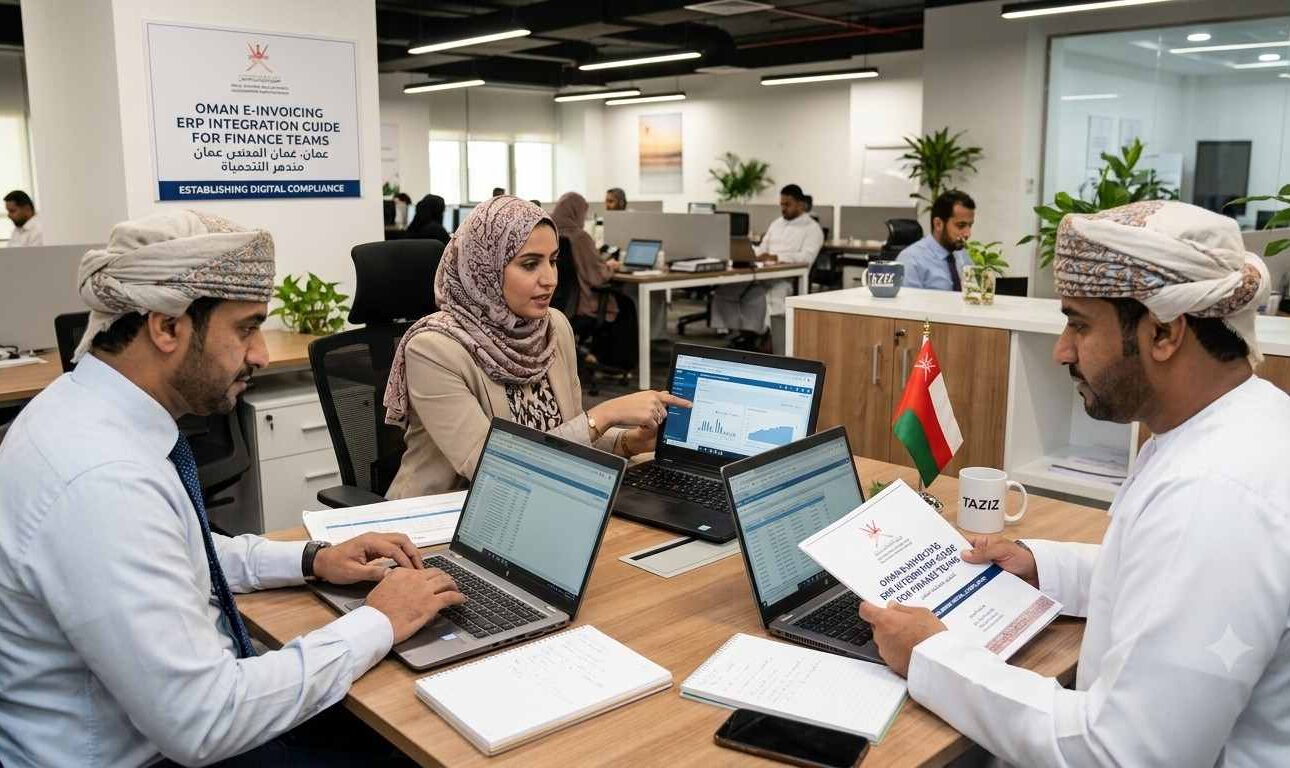
Understanding Oman E-Invoicing ERP Integration Requirements
Oman E-Invoicing ERP Integration is a critical step for businesses preparing for the Fawtara electronic invoicing framework. As electronic invoicing becomes a key part of Oman’s digital tax transformation strategy, organizations must ensure their ERP systems can generate, process, validate, and transmit structured invoice data efficiently.
ERP platforms serve as the foundation of financial operations, managing customer information, supplier records, tax calculations, invoice workflows, and financial reporting. Businesses implementing Xero Oman Implementation projects should evaluate whether current accounting and invoicing processes can support future electronic invoicing obligations.
A successful Oman E-Invoicing ERP Integration initiative involves more than software upgrades. Organizations must review data quality, business workflows, system architecture, reporting requirements, and compliance controls. Companies using Oracle Opera Hotel ERP Oman should ensure hospitality billing processes and invoice generation workflows align with structured invoicing requirements.
The move toward digital invoicing offers opportunities to improve accuracy, automate financial processes, and increase transaction visibility. Businesses that begin integration planning early are better positioned to reduce implementation risks and improve compliance readiness.
Organizations should view ERP integration as a strategic business initiative rather than solely a compliance project.
Preparing ERP Systems for Oman Fawtara Compliance
Preparing ERP platforms for Oman E-Invoicing ERP Integration begins with a comprehensive system assessment.
Businesses should evaluate invoice generation capabilities, customer master records, supplier databases, tax configurations, document workflows, and integration readiness. Organizations implementing NetSuite Cloud ERP Oman solutions should verify that invoice information can be generated in a consistent and structured format.
A readiness assessment helps identify system limitations before compliance requirements become mandatory. In many cases, businesses discover gaps related to invoice numbering, tax calculations, reporting structures, or workflow automation.
Companies using Xero Oman Implementation should also review invoice approval processes and financial reporting frameworks to ensure they support future electronic invoicing requirements.
Data quality reviews are equally important. Customer records, supplier accounts, tax references, and invoice templates should be audited regularly to improve consistency.
Strong preparation creates a reliable foundation for future compliance activities and reduces operational disruption during implementation.
Mapping ERP Invoice Data to PINT-OM Requirements
Data mapping is one of the most important aspects of Oman E-Invoicing ERP Integration.
PINT-OM standards define how invoice information should be structured and exchanged. Businesses must ensure that invoice fields within ERP systems correspond correctly to required electronic invoice formats.
Organizations using Oracle Opera Hotel ERP Oman should review invoice fields such as customer information, invoice references, tax details, payment terms, and billing amounts to ensure proper alignment with PINT-OM requirements.
Poor mapping can lead to validation failures, delayed invoice processing, and reporting issues. Companies implementing NetSuite Cloud ERP Oman environments should conduct detailed field-by-field mapping exercises before deployment.
Data consistency across systems is essential because electronic invoicing relies on accurate and structured information.
Businesses should establish governance processes that maintain mapping accuracy and support ongoing compliance.
Effective data mapping significantly improves invoice quality and operational reliability.
Integrating ERP Systems With the Peppol Network
The ability to connect ERP platforms to electronic invoicing networks is central to Oman E-Invoicing ERP Integration success.
Businesses must ensure invoice information can move securely between ERP systems, approved service providers, and future electronic invoicing environments.
Organizations evaluating an OTA Compliant Oman E-Invoicing Software Solution should assess integration capabilities, API support, transmission workflows, and data exchange mechanisms.
Companies implementing Xero Oman Implementation projects should review how invoices are transmitted, tracked, received, and validated through connected digital platforms.
Integration should support:
- Invoice generation
- Invoice transmission
- Validation procedures
- Status tracking
- Error handling
- Reporting requirements
A strong integration strategy improves invoice visibility while reducing manual processing activities.
Businesses that prepare integration frameworks early typically achieve better implementation outcomes.
Testing, Validation, and Common ERP Integration Challenges
Testing is essential for successful Oman E-Invoicing ERP Integration.
Organizations should validate invoice creation processes, ERP mappings, workflow configurations, validation mechanisms, and invoice reporting outputs before production deployment.
Companies operating Oracle Opera Hotel ERP Oman environments should perform multiple testing scenarios including standard invoices, credit notes, debit notes, and VAT-specific transactions.
One common challenge involves poor master data quality. Inaccurate customer details, duplicate accounts, and missing invoice information frequently create validation issues.
Businesses using NetSuite Cloud ERP Oman should conduct data cleansing initiatives before implementation to improve invoice consistency.
Another challenge involves system interoperability. Organizations often operate multiple platforms that need to exchange invoice information accurately.
Comprehensive testing helps identify weaknesses before compliance obligations become active.
Businesses can reduce implementation risks significantly through structured testing programs.
Best Practices for Finance Teams Managing Oman E-Invoicing
Finance teams play a central role in the success of Oman E-Invoicing ERP Integration initiatives.
The first best practice is establishing clear governance structures. Teams should define responsibilities for invoice quality, validation monitoring, reporting accuracy, and compliance oversight.
Organizations implementing an OTA Compliant Oman E-Invoicing Software Solution should document invoicing workflows and establish periodic review procedures.
The second best practice is maintaining strong data governance. Businesses using Xero Oman Implementation should regularly review customer records, supplier information, tax configurations, and invoice formatting standards.
The third best practice is continuous training. Employees responsible for invoicing, reporting, compliance, and ERP administration must understand new processes and requirements.
Finance teams can also learn valuable lessons from initiatives such as France Advintek, which have highlighted the benefits of governance, automation, and standardized implementation methodologies.
Additional insights can be gained from Singapore E-Invoicing Compliance 2026 programs that emphasize integration readiness, testing discipline, and data quality management.
Organizations that combine governance, testing, training, and technology readiness are generally more successful in achieving long-term compliance objectives.
Conclusion
Oman E-Invoicing ERP Integration is a foundational requirement for businesses preparing for the Fawtara electronic invoicing framework. Organizations that focus on ERP readiness, PINT-OM data mapping, Peppol connectivity, employee training, and rigorous testing can improve compliance readiness while enhancing operational efficiency. A structured integration strategy helps reduce risks, strengthen financial visibility, and create a scalable invoicing environment that supports long-term digital transformation goals.
FAQs
Q: What is Oman E-Invoicing ERP Integration?
Connecting ERP systems with compliant electronic invoicing frameworks to automate invoice generation, validation, reporting, and transmission activities.
Q: Why is ERP readiness important?
ERP readiness improves compliance preparation, strengthens invoice accuracy, supports automation, and reduces implementation risks significantly.
Q: What is PINT-OM data mapping?
The process of aligning ERP invoice fields with structured electronic invoicing requirements and validation standards accurately.
Q: Why is testing necessary before deployment?
Testing identifies configuration issues, integration problems, data inconsistencies, and validation risks before production implementation begins.
Q: What are common integration challenges?
Data quality issues, mapping errors, system interoperability concerns, validation failures, and insufficient testing commonly occur.
Q: How can finance teams improve readiness?
Review systems, improve data governance, train employees, conduct testing, and establish strong compliance management processes.
Q: What are the benefits of ERP integration?
Improved automation, stronger compliance readiness, enhanced reporting accuracy, greater visibility, and reduced manual processing efforts.
Source by:
Image by Gemini